By Phyllis Mansfield
Lora and Matt beautifully arranged the field trip to Blue Heron Water Treatment Facility this morning for 10 birders. A bonus was Matt and his vehicle to transport scopes and tired walkers! 44 species were seen during the morning and the highlights were probably the 3 AMERICAN BITTERNS. Marilyn spotted a SORA RAIL, and we were to hear a couple more. BLACK-BELLIED WHISTLING-DUCKS were calling and showing off their unmistakable color. BLUE-WINGED TEAL were present and a lovely flock of AMERICAN WHITE PELICAN soared overhead. NORTHERN HARRIER and RED-SHOULDERED HAWK are dependable here while a MERLIN was an added bonus. I counted 6 GREEN HERON, only 1 WOOD STORK. 3 CASPIAN TERNS, plenty of COMMON YELLOWTHROATS and YELLOW-RUMPS and good numbers of PALM WARBLERS. SAVANNAH SPARROWS were scarce with only a few SWAMP SPARROWS.
The finale was lunch with Matt and Lora while we watched PAINTED BUNTINGS, AMERICAN GOLDFINCH, TUFTED TITMOUSE, RUBY-CROWNED KINGLET, BLUE JAYS and NORTHERN CARDINALS.
Great morning and much thanks go to Lora and Matt.

Saturday, December 1, 2012


December Events at Sams House at Pine Island - Celebrating Families!
By Katrina Morrell, CIT, CIP, Education Coordinator Sams House at Pine Island Conservation Area
Pioneer Picnic and Nature Crafts - Saturday, December 1st, noon to 2 pm
Bring the family and a picnic lunch while “Sister” and “Sarah” Sams delight you with pioneer tales and old-fashioned nature crafts.
John H. Sams: A Pioneer Story - Saturday, December 8th, 3 pm to 3:30 pm
Get the inside scoop on the heritage and life of Merritt Island pioneer John Sams. Mr. Sams was the first Superintendent of Brevard County Schools and built the oldest standing home in Brevard County, the 1875 Sams cabin.
Sounds of the Night Marshmallow Roast - Saturday, December 15th, 4 pm to 6 pm
Discover what animals make the sounds you at hear at night with a special family friendly slideshow, then listen for those sounds while roasting marshmallows around the campfire.
Pioneer Pathways Hike - Friday, December 21st and Saturday, December 29th, 10 am to 11:30 am
Learn what life was like for early pioneers and what plants and animals they used in this informative 1/2 mile nature hike.
Family Nature Hike - Saturday, December 22nd, 10 am to 11:30 am
Enjoy some family bonding time while exploring the beauty of Pine Island. This short nature hike is good for all ages.
Family Tree Craft - Thursday, December 27th, 10 am to 11 am
Using our template and your family pictures, we’ll create a family tree worthy of framing!
Florida History Expedition - Friday, December 28th 10 am to noon
Perfect for elementary-school aged children and their families. We’ll travel back in time to Florida’s beginnings, sift for Ice Age fossils, learn how to throw a spear, and discover what pioneer life was like.
1875 Cabin and 1888 House Tours - every Thursday, 3:00 - 3:30 pm
Make this Holiday Season Count for Conservation!
Reprinted from the Audubon Advocate
Bring Legacy campaign petitions to your next holiday gathering.
In Florida, the holiday season for many people means enjoying time with family outside. Whether it's walking along the beach searching for shells or camping at one of our amazing state parks, you've no doubt experienced how amazing Florida's natural areas are during our beautiful fall season.
Thanks to volunteers across the state, the Florida Water and Land Legacy campaign continues to gather momentum. Over 27 Audubon chapters have endorsed the campaign as organizations. Congratulations to Alachua Audubon for remaining in the top 4 petition gathering organizations for the third week in a row!
What's their secret? Sharing the job. Leaders participating include Helen Warren, John Killian, Emily Schwartz, Debra Segal and Kathy Fanning. Duval Audubon popped up into 4th place this week listing Pete Johnson as the primary gatherer and Dave Kandz put St. Petersburg Audubon on the list last week.
Individual stars include Paula Wehr from Halifax River Audubon, John Hood from Clearwater Audubon (in the top ten for 2 weeks) and Carl Veaux from Audubon of Southwest Florida.
But we still need your help to gather signatures. All you need to do is gather at least 15 signatures from your friends, neighbors, and co-workers during the holiday season.
So pick up your package of petitions today. Be sure to check out the short training video and get ready to make a difference for Florida's environment! There are people all over the state with supplies so to find a stash near you - contact Jason Brady at jason@floridawaterlandlegacy.org.
Here are a few ideas for how to get your signatures:
As you get together for family gatherings and office parties, bring along some petitions and gather from the people you know.
Are you heading to a Turkey Trot or other outdoor event next week? Gather a few signatures while you're registering (or while relaxing with your post-race snacks and beverages!) Many cities are hosting Thanksgiving Day races. Here are just a few: Miami, Tampa/Pinellas, Jacksonville, Ft. Lauderdale, Cape Coral, and Naples.
Knock on a few doors in your neighborhood and ask you neighbors to sign! Many people bring goodies to neighbors during the holiday season, so use it as an opportunity to gather signatures too.
If you need petitions, please let the campaign know ASAP or contact (850) 629-4656.
Audubon and the Florida Water and Land Legacy campaign thank you for all your support. Keep up the incredible work!
Christmas Bird Count: Exciting News!
Reprinted From Audubon Chapter Services Newsletter
The Christmas Bird Count is coming! This year’s count period is Dec 14, 2012 to January 5, 2013, and we want to thank you in advance for all you do as Chapter leaders to make this Count happen. Chapters nationwide organize and run hundreds of count circles; your good efforts are the reason the longest running citizen science project in the world is so successful.
This year, as you get ready for the Count and encourage members to join in, there is some exciting news. The CBC is now a free program. For the first time since 1955, Audubon will waive the $5.00 participant fee and replace it with a voluntary donation and sponsorship model. Also, American Birds will no longer be mailed to every participant. Instead, Audubon will move to an online delivery of the CBC summary results and features.
To help Audubon make these important decisions regarding the CBC, we invited people involved with the count to participate in an online survey. The results were very enlightening and are summarized in the 112th CBC summary issue of American Birds that was released in October. The written comments underscored how passionately people feel about the CBC, and that the fee was a major obstacle to the program.
Also highly informative were comments regarding American Birds. The primary sentiment expressed was that recipients do not value American Birds in its printed version, and many survey respondents felt that an interactive, online version of the magazine would better suit their needs—especially if the participation fee was dropped.
An exciting new era has arrived—one with a free and completely online Christmas Bird Count!
For information and results from the Christmas Bird Count, please visit the main CBC website:
http://birds.audubon.org/christmas-bird-count
For information on the history of the CBC, please use this link:
http://birds.audubon.org/about-christmas-bird-count
Bird Conservation Updates
Reprinted from the Cornell Lab of Ornithology E-News
Ingenious Camera Takes Viewers Up, Way Up
Few people have ever witnessed a Greater Bird-of-Paradise displaying at dawn above the New Guinea rainforest. And no one had ever taken photos or video of such an awe-inspiring sight—until Tim Laman invented the ingenious “Leaf-Cam” and hid it 150 feet above the ground. Cornell Lab researcher Ed Scholes, Laman’s partner in the eight-year Birds-of-Paradise Project, describes how it was done in the latest issue of our Living Bird magazine. This special online version includes bonus videos of displaying birds-of-paradise and the story of how the “Leaf-Cam” works. Read the story, see the videos.
Our Computers Are Learning the Parts of a Bird. Can You Help?
We dream of a future where bird ID gets a little help from the processing power of computers. That’s the goal of our Merlin project, which will combine artificial intelligence with the collected wisdom of thousands of real birders. You can help us make Merlin a reality by doing a few fun activities in your spare time. Our new Hot Spot activity asks you to zero in on parts of a bird to help the computer recognize what’s what. It’s fun, you can do as many or as few as you like, and you get to see lots of great bird photos. Try it out.
Take a Road Trip
Our Upcoming Bird Festivals webpage makes it easy to plan your next birding destination. You can look through listings by calendar or on a map, so you can start planning your road trip right from the page.
Bird "Personality" Pays Off at Feeders
Do you notice differences in the behavior of individual birds that come to your feeders? The topic of animal "personality" is a growing interest in biology—and advances are coming from studies of bird feeders. In a recent study of the Great Tit (above), English scientists learned that some birds were inveterate risk takers while others played it safe even if it meant going hungry more often. Read the full story in Living Bird magazine.
Recommended Link
By Dee Fairbanks Simpson
If you don't already receive the Focusing on Wildlife Newsletter, you might have missed this awesome article and photos of Viera Wetlands:
http://focusingonwildlife.com/news/viera-wetlands-a-birderss-paradise-part-one/
You can also sign up for the newsletter which is always a beautiful and informative read.
Save the Dave: The Audubon Convention Returns!
Date: July 12-15, 2013
Place: Skamania Lodge, Stevenson, Washington
Get your Audubon on! After 13 years, the Audubon Convention returns. Join Audubon staff, volunteers, and Chapter leaders to learn about how our work contributes to Flyways conservation. Experience four days of cutting-edge science, networking, birding and FUN in the Pacific Northwest.
For more information and to receive email updates visit www.audubon.org/2013convention
Call for Mini-Grant Applicants
Cornell Lab of Ornithology Press Release
Funds support neighborhood events about birds and nature
Ithaca, NY--The Cornell Lab of Ornithology’s “Celebrate Urban Birds” project is accepting applications for mini-grants to fund neighborhood events that promote an appreciation for birds and nature. Organizations working with underserved communities are strongly encouraged to apply. No experience with birds is required. Grants average $250-$500.
Celebrate Urban Birds mini-grants should be used to support a bird-activity day at a local museum, afterschool program, library, or community center, or fund art and gardening activities at clubs, businesses, schools, senior centers, or neighborhoods. Events or projects should feature activities involving birds, community service, art, and greening. Participants are encouraged to collect simple information about common birds and report to the Cornell Lab.
Click here to learn more about how to apply for a mini-grant. Deadline to apply is December 15, 2012
Satellite Beach Recreation Department December Announcements
Beachlovers & Trash Haters
Beachlovers & Trash Haters are gathering at Pelican Beach Park, north dune crossover at 8am on the second Saturday monthly. Individuals and groups participate in the informal trash bash spearheaded by Judy DeLaRosa. Keep Brevard Beautiful will supply trash bags and gloves. Volunteers should bring their own drinking water. No need to rsvp, just show up! Contact Judy judy@mitchrealty.com or 960-0436.
Samsons Island Park Workdays
Samsons Island Nature Park is a 52 acre island owned by the City of Satellite Beach located in the Indian River Lagoon. Since 1991, city volunteers and staff have worked diligently to re-vegetate this spoil island to provide improved habitat for local flora and fauna. City workdays recruit individuals, families and local organizations to lend a hand with park duties that suit their ability level. Special workdays are sponsored in the Fall and Spring (call 773-6458 for dates). However, those interested in volunteering on a regular basis can join the weekly Sunday workday, leaving at 1pm from the SB Fire Department Dock. For more information, contact Kerry Stoms, SB Rec. Dept. Director, at 773-6458 or kstoms@satellitebeach.org
The Sea Turtle Preservation Society
The STPS continues to hold their meetings in the Melbourne Beach Community Center on the first Thursday of each month. The meeting starts at 7:30pm and usually includes a guest speaker. The public is welcome to attend. For more information call the Sea Turtle Preservation Society at 676-1701. www.SeaTurtleSpacecoast.org
Hightower Beach Park in Satellite Beach!
Your family might wish to discover the educational boardwalk located at Hightower Beach Park, HWY AIA. Signage along the boardwalk provides information on whales, turtles, birds, our famous worm rock and much more. The message empowers those reading it to make a difference in the lives of each animal and gives instructions on how simple actions can result in big changes.
Satellite Beach is a recycling-conscious community!
Check out the recycle area behind the David R. Schechter Community Center, 1089 S. Patrick Drive. There are bins for glass, plastic, aluminum, cardboard and paper products. Inside the lobby, we regularly collect items that can be used by others such as eyeglasses (recycled by the SB Lions Club), coffee mugs (recycled by the SB Womans Club for Daily Bread), greeting card fronts, bottle caps (recycled by Brev. Montessori School, SB) and cell phones for soldiers. View the full list of recycling opportunities @ www.satellitebeachrecreation.org
Free Wildlife Tours
By Kevin J. Lowry, Pelican Island National Wildlife Refuge
THAT’S WILD - Join us on our new E-tram as we take you on a journey through Pelican Island NWR to experience wildlife up close while making a strong connection to the natural world.
FREE refuge programs are scheduled every other Wednesday 8-10AM from November to March. Don’t have binoculars? We’ve gotcha’ covered and will have field guides for everyone! Space is limited. MUST call 772-581-5557 for reservations. We hope to see you outside on America's first national wildlife refuge soon!
Follow PINWR on Facebook: facebook.com/PelicanIslandNWR
Great Backyard Bird Count Goes Global in 2013
Cornell Lab of Ornithology Press Release
After 15 years of success in North America, the Great Backyard Bird Count (GBBC) will open up to the entire world for the first time in 2013. Anyone, from anywhere on earth, can participate by visiting www.birdcount.org and reporting the kinds and numbers of birds they see during the 16th annual count, February 15–18, 2013.
A joint project of the Cornell Lab of Ornithology and National Audubon Society, with partner Bird Studies Canada, the four-day count typically receives sightings from tens of thousands of people reporting more than 600 bird species in the United States and Canada alone.
WA, 2012 GBBC “This year’s count will give us a whole new perspective as sightings pour in from around the globe in real time,” said Marshall Iliff at the Cornell Lab of Ornithology. “Millions of people encounter birds every day all over the world. Imagine what scientists will learn if each one of us shares observations from our own area!”
During the 2012 count, participants reported 17.4 million bird observations on 104,000 checklists. Snowy Owls thrilled many participants when these striking birds-of-prey ventured south from the Arctic in record numbers. In 2013, scientists predict that U.S. and Canadian bird watchers will see an influx of Red-breasted Nuthatches and winter finches (such as Pine Siskins) because of scarce food supplies on their northern wintering grounds.
“The GBBC is an ideal opportunity for young and old to connect with nature by discovering birds and to participate in a huge science project,” said Gary Langham, Audubon’s Chief Scientist. “This year, we hope people on all seven continents, oceans, and islands, will head out into their neighborhoods, rural areas, parks, and wilderness to further our understanding of birds across the hemispheres.”
Participating is easy. Simply watch birds for at least 15 minutes at the location of your choice on one or more of the count days. Estimate the number of birds you see for each species you can identify. You’ll select your location on a map, answer a few questions, enter your tallies, and then submit your data to share your sightings with others around the world.
The global capacity for the count will be powered by eBird, an online checklist program for all of the world’s 10,240 bird species. Participants will be able to view what others are seeing on interactive maps, keep their own records, and have their tallies recorded for perpetuity.
“The popularity of the Great Backyard Bird Count grows each year," said Dick Cannings, Senior Projects Officer at Bird Studies Canada, "and with the new features, participation will be even more exciting.”
The Great Backyard Bird Count is sponsored in part by Wild Birds Unlimited.
Saturday, November 10, 2012
Important SCAS General Meeting: Space Florida and the Merritt Island Wildlife Refuge

Space Florida is reaching out to environmental stakeholders to discuss their concept for both a new commercial spaceport located in the MI Wildlife Refuge, and the transfer of title for the remaining acreage of that land north of Haulover Canal from NASA to the Department of the Interior. Space Florida understands this will only be accomplished through a genuine dialogue within the community, including at this meeting.
Please join us at the Rockledge Presbyterian Church on the evening of November 16 at 7:30 for this important meeting! Visit us online to learn more: www.spacecoastaudubon.org
Thursday, November 1, 2012
Marine Conservation E-Atlas Launched
Reprinted from Audubon Chapter Leader Update
BirdLife International has launched the first global inventory of important sites for the conservation of migratory marine species. The new e-Atlas covers 3,000 Important Bird Areas (IBAs) worldwide. It is the result of six years of effort that, to date, has involved the world’s leading seabird scientists in collaboration with government departments of conservation, environment and fisheries, and the secretariats of several international bird conservation conventions.
The e-Atlas provides essential information for conservation practitioners and policy makers; for energy sector planners (windfarms, gas and oil exploration and drilling); for fisheries managers; for marine pollution management planners; and for the insurance industry. Like a Google Map, the e-Atlas will be dynamically updated as new sites are identified and new data about them become available. It will be linked to other BirdLife data resources, including BirdLife’s species accounts, IBA fact sheets and State of the World’s Birds case studies.
Experience the IBA e-Atlas at www.birdlife.org/datazone/marine.
Save the Wrinkle-lipped Bat!
By Dave Waldien, Ph.D., Interim Executive Director, Bat Conservation International
The wrinkle-lipped free-tailed bat of Southeast Asia is very similar to the Mexican free-tailed bat of North and South America. Both are migratory species that form huge colonies – often numbering millions of bats – and consume enormous amounts of insects.
In the United States, scientists have shown that Mexican free-tailed bats save American farmers many millions of dollars every year by removing insect pests. No such research exists for wrinkle-lipped bats. And while major free-tail roosts are largely protected in North America, that’s not often the case in Southeast Asia, and no conservation measures are in place for wrinkle-lipped bats.
The damage has been tragic! A colony of about 300,000 bats was destroyed in Myanmar as a result of mining. Hundreds of thousands of bats were eradicated as pests in Cambodia. In the Philippines, where wrinkle-lipped bats once were among the most abundant cave-roosting species, virtually all large colonies are now gone. The species is also battered by unregulated hunting for food. BCI joins the International Union for Conservation of Nature (IUCN) in calling for urgent action to protect key roosts and for public-awareness campaigns throughout the region.
Small grants ($3,000 to $5,000) provided to local partners in Southeast Asia can make a real difference. A trusted partner recently warned that the species’ largest colony in Vietnam – more than a million bats – is being threatened by hunting. We responded immediately and are working with local conservationists on awareness campaigns designed to stop the hunting.
But we need your help to ensure the long-term survival of this Vietnamese colony and of the species itself by securing all significant colonies throughout Southeast Asia. Success will require an integrated, multinational partnership to identify and protect roost sites and document the economic value of these battered bats.
Our goal is to raise at least $15,000 from bat advocates like you so BCI can help local conservationists take immediate action. American farmers are already enjoying the benefits of BCI’s conservation of Mexican free-tailed bats.
Help us ensure that farmers throughout Southeast Asia can reap the same benefits!
Please donate today to help BCI meet this critical challenge and other urgent threats to the world’s bats!
Lanark Reef: We Did It!
By Julie Wraithmell, Audubon of Florida Director of Wildlife Conservation
Friends, we did it!
I’m pleased to share with you that in the final days of September, Audubon quietly closed on the last private inholding on the Panhandle’s Lanark Reef. Thank you so much for your support - together we have made a lasting difference for Florida's iconic coastal wildlife.
Lanark presents one of the last examples of what was once commonplace on Florida’s coasts: a dynamic barrier island, shaped by wind and tides, supporting a vibrant natural community of Florida’s signature wildlife - without a car or a condo to its name.
With the help of some local volunteers, I joined Tallahassee Democrat reporter Jennifer Portman for a boat tour of the island earlier this week. Together we watched two adult Bald Eagles tussle overhead while two migrating American Kestrels took advantage of the morning’s cool north wind. A hunting Northern Harrier flushed clouds of Marbled Godwits, Willets, and a phalanx of Black Skimmers into the air. Fish jumped, sea oats swayed, and for a brief, perfect moment I exhaled and got comfortable with the realization that this remarkable place was now off the market forever.
As conservationists, the need is always greater than our capacity and so we often move on quickly from our successes in our rush to meet the next looming challenge. But not this time! Please join me in congratulating you, each other, on this success.
This morning, I woke up to see Jennifer's article was on the front page of the Tallahassee Democrat. Savor the satisfaction of this victory for Florida’s coastal birds.You’ve earned it! Click here to see the article: http://fl.audubonaction.org/site/R?i=PfcWhmV-iGkol5uOz7P2rQ
For the birds of Lanark Reef, Monday was just another day of making their living with grace and strength in one of Florida’s harshest environments. On behalf of myself and Audubon Florida, my heartfelt thanks goes out to our supporters, the donors from across the nation, and the National Fish and Wildlife Foundation for making these birds’ everyday existence more secure with the acquisition of this special place.
Thank you.
Sincerely,
Julie Wraithmell
First Conservation Assessment of All American Birds Shows More Than a Third Need Help
By Steve Holmer, Senior Policy Advisor American Bird Conservancy & Director, Bird Conservation Alliance
 A new study on the conservation status of American birds completed by American Bird Conservancy (ABC) is the first-ever published to include the full range of bird diversity in all 50 U.S. states and dependent territories. The study finds that more than one third of these birds are in need of conservation attention. More details, including a complete bird list with conservation rankings, can be found at abcbirds.org/checklist.
(At left) Painted Bunting: the eastern subspecies is considered to be At-Risk but historically has received relatively little conservation attention. Photo by Owen Deutsch.
While the conservation status of bird species has been widely researched in the past, the new study is the first national assessment to also rank the status of subspecies: regional forms of species that differ in appearance, and sometimes in habitat choice and migration patterns.
“By looking beyond the species we can better gauge the conservation status of the total diversity of birds in the United States,” said the study’s principal author and American Bird Conservancy Vice President, Mike Parr. “There are more than twice as many subspecies recognized as there are full species, so these data provide a more complete picture than we have ever had previously. In addition, birds that are today classed as subspecies may tomorrow be re-classified as full species when more information comes to light. This study will help make sure we don’t miss these birds as we move forward with conservation programs. While the good news is that most of the highest scoring (most “At-Risk”) birds are already protected by the Endangered Species Act, there are definitely some surprises in here too," Parr said.
“ABC’s Conservation Ranking of bird subspecies is a major contribution to our understanding of bird conservation priorities. This assessment elevates these taxa to genuine elements of biodiversity that deserve more attention, and reinforces the fact that we have bird conservation work to do essentially anywhere you look in the United States” said Terry Rich, National Coordinator for Partners in Flight (PIF), a cooperative effort concerned with conserving bird populations in the Western Hemisphere.
Some examples of birds that are of particular concern are subspecies such as the eastern Bewick’s Wren, the California population of the Black Rail, the eastern Painted Bunting, and the Gulf Coast population of the Snowy Plover; and full species such as the Bicknell’s Thrush, Brown-capped Rosy-Finch, and the Buff-breasted Sandpiper. These are also birds that exemplify the range of threats that birds face today, ranging from habitat loss to climate change.
Half of the birds of greatest concern are restricted to Hawai, yet endangered Hawaiian species such as the Palila and Maui Parrotbill tend to receive significantly less recovery funding than their mainland counterparts.
"Having a high score on this list is a red flag," Parr added. "We need to pay attention to these birds. If you have high cholesterol, it doesn’t mean you have heart disease, but you do want to do something about it. The same principle applies to many birds on this list.”
"By focusing new conservation attention on distinctive bird populations adapted to local habitats, this new analysis adds significantly to our species-centric view of conservation priorities," said Ken Rosenberg of the Cornell Lab of Ornithology and Chair of Partners in Flight's International Science Committee. "Our hope is that more regional and local groups will become engaged in helping to keep these birds from slipping through the conservation cracks."
The scoring system used by the study employs a standard methodology developed by bird scientists working through PIF, and adopts PIF scores for full species. These scores provide a total “vulnerability rank” for each bird based on a range of factors from population size to threats. Based on these scores, ABC also ranked subspecies, and then placed each bird into one of four status categories: Secure (), Potential Concern (), Vulnerable (), or At-Risk ().
“Without the significant body of work already conducted by Partners in Flight and the many independent scientists and volunteers who have contributed the core data on species, the current study would not have been possible,” Parr added.
Click here (http://www.abcbirds.org/abcprograms/science/conservationchecklist/index.html) to view the printed version of the checklist that is derived from the study.
In total, of the 1,826 birds that were assessed, 273 species or subspecies (or 15%) were regarded as Secure . Some of these are birds (e.g., the familiar American Robin) that have been able to adapt well to habitat changes caused by humans, while more specialized species, for example, the Wood Thrush and Grasshopper Sparrow, have been unable to adapt to many of these changes. A further 850 birds (46%) were considered to be of Potential Concern , meaning that they are also currently safe, but may need more careful monitoring than those in the Secure category. The remaining birds were categorized as Vulnerable (547 birds – 30%), and At-Risk (156 birds – 9%).
“Many of the species and subspecies that are of greatest concern are specialists – restricted to certain food sources or particular natural habitats,” said American Bird Conservancy President George Fenwick. “We are urging the bird conservation community to take a closer look at the Vulnerable and At-Risk species and subspecies in particular. Many of these are below the radar for conservation right now,” he added. “Of course this doesn’t mean that we shouldn’t try to keep common birds common as well. As conservationists, our goal should be to maintain both the abundance and the diversity of birds. Both common and rare species are sustaining significant and unnecessary losses due to habitat change and avoidable mortality caused, for example, by collisions, pesticides, and cat predation.”
In addition to addressing the status of species and subspecies, the study has also created a list of birds that are differentiated because of the habitats to which they are restricted. These “habitypes” are typically birds that are otherwise identical to related populations, but use different ecosystems for nesting or foraging. For example, the Swainson’s Warbler has one population that nests in Appalachian rhododendron forests and another that nests in bottomland swamps; and the Marbled Murrelet has one population that nests in trees in Pacific old-growth forests and one that nests on the ground.
“While this assessment is the most complete we have, it should be considered a starting point, not an endpoint,” said David Pashley, ABC’s Vice President of U.S. Conservation Partnerships. “We hope it will begin a conversation that will lead to an optimal system of both setting and acting on bird conservation priorities for all birds."
“The new study also provides a baseline or “scorecard” against which future changes in bird populations and threats can be assessed,” added Parr. “The total of all the conservation assessment scores for the 1,826 taxa amounts to 21,662. When we reassess bird conservation status in the future, we will be able to see how this total number differs, providing a measure of comparison to this 2012 assessment."
American Bird Conservancy Updates
By Steve Holmer, Senior Policy Advisor American Bird Conservancy & Director, Bird Conservation Alliance
Due to Loss of Birds, Arachnophobes May Want to Avoid Guam
http://www.abcbirds.org/newsandreports/releases/120917.html
A new study on the island of Guam reveals that the near-total loss of native birds caused by the invasive brown tree snake has led to a huge increase in the number of spiders. During certain times of the year, arachnids on Guam occur at 40 times the rate of nearby islands where the snake is absent and birds persist."
Largest Snake ever Recorded in Florida Captured - with 87 Eggs
http://www.abcbirds.org/newsandreports/stories/120821.html
Researchers with the U.S. Geological Survey in Florida have captured a 17-foot-7-inch-long, 164.5-pound Burmese python in Everglades National Park, a record for the state. Scientists found out later that the snake also contained a state record, 87 eggs.
Study Shows Growing Coffee and Cacao in Shade Helps Birds
http://www.abcbirds.org/newsandreports/stories/120816.html
While natural forests provide the best habitat for tropical birds, a new study from the University of Utah found that wooded "shade" plantations - called agroforests -- that produce coffee and chocolate with some native forest trees left standing, provide four times greater bird diversity than open farmland.
ABC Adds Three Reserves to ConservationBirding.org
ABC has added two new destinations and updated four others on its ConservationBirding.org website, a unique resource that helps conservation-minded birders plan trips to see some of the rarest birds in Latin America while contributing to their conservation. The sites are in Peru and Bolivia and are home to such rarities as the Long-whiskered Owlet and Marvelous Spatuletail (Peru) and Red-fronted Macaw (Bolivia). Come visit!
Voters Approve Conservation Spending Measures
Across the nation, voters of all political leanings gave overwhelming approval o taxing themselves and spending money for new parks in their communities, The Trust for Public Land announced following the last election Tuesday. Of the 57 measures on local and statewide ballots, 46 passed—an approval rate of 81%. The measures in 21 states will provide more than $2 billion overall, including $767 million in new money to support protection of water quality, new parks and natural areas, and working farms and ranches. Complete results can be found on The Trust for Public Land's LandVote website, www.LandVote.org.
Field Guide to Web Technology Available
http://webtechguide.sepif.org/xwiki/bin/view/Main/
This publication was started through Southeast Partners in Flight to provide an introduction to some potentially useful and (hopefully) persistent web tools for improving the efficiency and effectiveness of bird conservation. It is a compilation of short documents, written for a broad audience of biologists, researchers, and managers, consisting of one page descriptions of various web tools and their potential uses for bird conservation.
Field Guide to Southeast Bird Monitoring Protocols and Programs Available
http://semonitoringguide.sepif.org/
This guide is targeted at researchers, land managers, and biologists in the southeast bird conservation community and beyond. The main objective of the guide is to serve as a starting point when considering a monitoring program by summarizing many of the protocols that are available. It is not intended to be a detailed and comprehensive guide, but rather provides one-page introductions to a variety of popular, multi-species bird monitoring programs and protocols that are currently used, or could be used, within the Southeast Partners in Flight region.
Birds of a Feather?? By Mary Thrasher
 In October, I was in Grant for a dog thing but I always have my trusty Nikon 7000 handy. In a tall pine tree I saw a flock of peacocks with strange friend in roosting with them. It was Osprey siting on the top branch along with his peacocks buddies. What's the old say "Birds of a feather" Well, not always.
Sunday, October 14, 2012
Join SCAS for: Florida Wildflowers for Seaside Communities
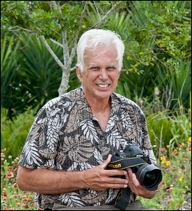
Join SCAS on October 19 when we welcome Vince Lamb, recently elected Vice-Chair of the Florida Wildflower Foundation, who will present "Florida Wildflowers for Seaside Communities"
The destruction of native plants that provide flowers and fruits to support insect populations is a major factor in the decline of many bird species, especially the migratory ones. We can help to reverse this decline by planting flowering native plants in our yards. Scientific research supports this concept, and many of us have seen evidence in our yards. Vince will talk about the direct relationships between wildflowers and birds, and most importantly, how we can support insects using native wildflowers.
Subscribe to:
Posts (Atom)